
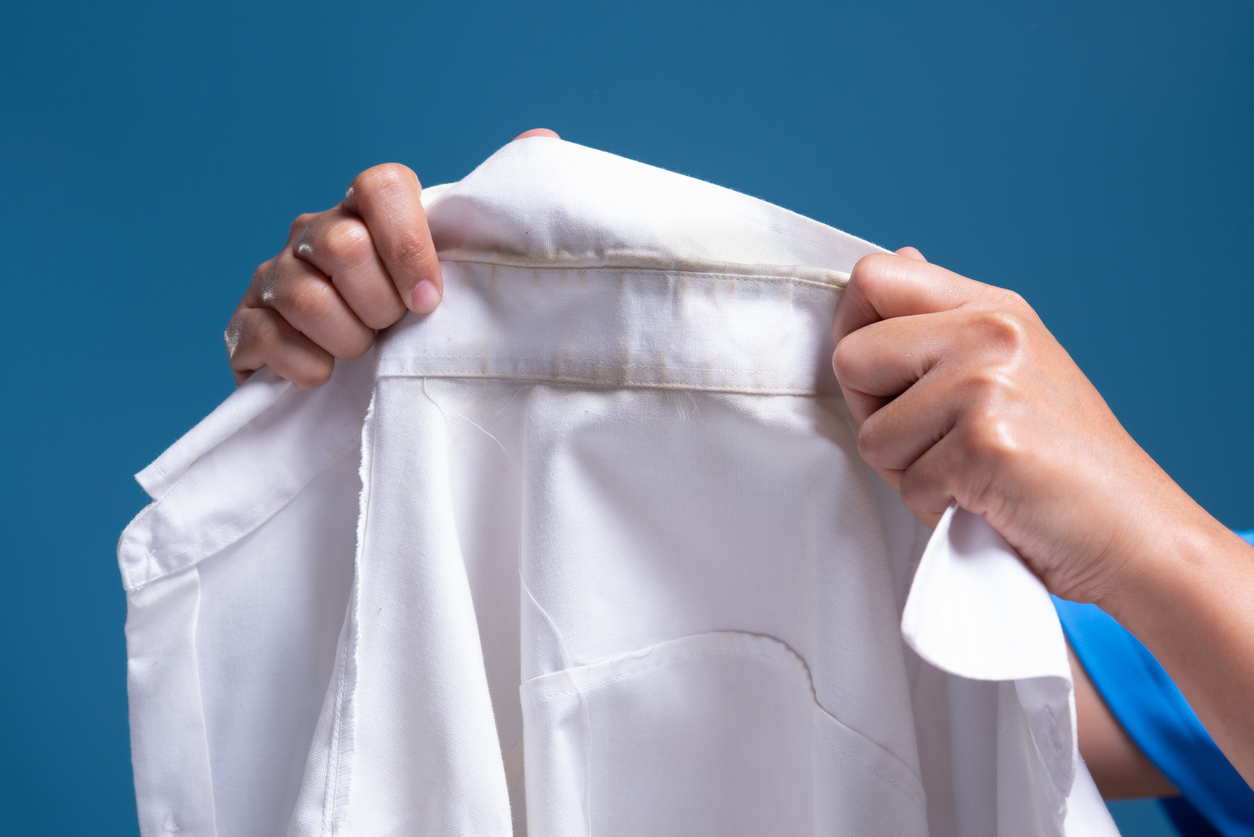
It never shows up all at once. A shirt looks fine for weeks, then one day the collar has a faint shadow that wasn’t there before, and by the time you notice it, it’s already had a head start. That’s a collar ring, and it’s not a sign you missed a wash.
It’s oil and sweat that regular detergent can’t fully break down, quietly darkening every time the shirt goes through a normal cycle without the one step that actually targets it. Here’s that step, and exactly how to use it before the ring sets for good.
The Home Method That Genuinely Works, Dish Soap and Warm Water
Dish soap, the kind meant for grease on dinner plates, is formulated to break down oil. That’s exactly the problem collar ring presents, which is exactly why it works where laundry detergent doesn’t. A few drops of a degreasing dish soap, worked directly into the ring, grabs the oil and lifts it off the fiber instead of just diluting it in the wash water along with everything else in the load.
Temperature is where this departs from most stain advice you’ve read. Cold water is the standard recommendation for stains like blood or egg, because heat sets those proteins permanently. Collar ring runs the opposite direction. Oil loosens in warmth and stays locked in place in cold water, so the warmest setting your fabric can tolerate, not the coldest, gives you the best shot at getting it out.
Check the care label first. This is the one stain where warm is the right answer, not the safe default.
The 15-Minute Pre-Treatment Sequence Step by Step
- Lay the collar flat, inside facing up, and take a look at how set the stain actually is before you start.
- Apply dish soap directly to the ring, enough to fully coat the discolored area, not just a token drop.
- Work it into the fibers with a soft bristle brush or an old toothbrush for 30 to 60 seconds.
- Let it sit for 15 minutes. This is what gives the surfactant time to break the oil’s bond to the fiber, so don’t skip it or rush it to save time.
- Wash the shirt in the warmest water the fabric label allows, using your regular detergent as normal.
- Check the collar before it goes anywhere near a dryer. If any shadow of the ring remains, repeat the treatment rather than drying it.
Drying a shirt with the stain still visible sets it for good, which is why that final check matters more than it might seem to at the moment.
The Home Methods That Don’t Work (or Make It Worse)
- Chlorine bleach: reacts with the oxidized oil and protein residue already sitting in the fabric and can turn a faint ring into a permanent yellow brown stain.
- Baking soda on its own: mildly abrasive and useful for odor, but it doesn’t break down oil, so used alone it does close to nothing on an actual collar ring.
- Vinegar: a mild acid that helps with mineral deposits and hard water buildup, not with body oil. Save it for a different kind of stain.
- The dryer, any time the ring is still visible after washing: heat bonds whatever oil and protein residue is left directly into the fiber, and past that point, home methods stop working on it.
Why Chlorine Bleach Turns Collar Ring Permanently Yellow
This one deserves its own explanation, because it’s the fix people reach for first, on the assumption that bleach handles everything. Collar ring already contains oxidized oil and denatured protein residue that’s been sitting on the fabric, sometimes for months. Chlorine bleach reacts with that oxidized material in a way that produces yellow brown discoloration instead of removing it.
Unlike a fresh stain, this reaction usually can’t be undone at home once it’s happened. Heat setting is widely recognized as the single largest cause of stains becoming genuinely unrecoverable, and a bleach reaction on already oxidized residue behaves the same way, a permanent chemical change rather than a stain still sitting on the surface waiting to be lifted.
Skip the bleach on collars entirely, even on rings that look old and stubborn enough that you’re tempted to bring out something stronger.
The Fabric Types Where the Standard Method Needs Adjustment
The dish soap method is safe for most cotton and cotton blend dress shirts, but a few materials call for more caution or a professional hand instead:
- Silk and silk blend shirts: can water spot or lose their sheen under vigorous brushing.
- Wool or wool blend collars: can felt or shrink when exposed to warm water and scrubbing.
- Shirts with structured, fused interfacing in the collar: warm water and repeated agitation can cause the interfacing to bubble or separate from the outer fabric over time.
- Anything not colorfast: should get a small test spot on an inside seam before dish soap touches the visible collar.
If your shirt falls into any of these categories, it’s worth having it assessed by a professional rather than risking the fabric on a DIY attempt that can’t be undone.
When to Stop DIY and Send the Shirt to a Professional
- The ring has been building for months or through dozens of washes and hasn’t budged after one or two rounds of the home treatment.
- The fabric is delicate, structured, or not colorfast, as covered above.
- A home attempt has already made the stain look worse: more yellow, more set, or more widespread than when you started.
- It’s a shirt you genuinely can’t afford to lose, whether that’s the cost of replacing it or what it means to you.
There’s no shame in any of this. Collar rings are one of the most common reasons dress shirts end up at a cleaner instead of in a home wash, and it’s a normal side effect of wearing button down shirts regularly, not a sign you’re doing laundry wrong.
Prevention: How to Stop the Ring From Coming Back
- Wear an undershirt or a dress shield insert so body oil and sweat hit a layer you can wash aggressively instead of the collar itself.
- Pre-treat the collar with dish soap before every wash, not just after a ring has already appeared. A few seconds of prevention is faster than the full 15 minute treatment later.
- Launder dress shirts within two or three wearings instead of letting oil build up over a week or more between washes.
- Have heavily worn shirts professionally cleaned periodically, even before a ring is visible, to reset the fabric before oil has had time to oxidize and set.
What a Dry Cleaner Actually Does That Home Methods Can’t
Professional dry cleaning uses solvent-based processes and enzyme pre-treatments built specifically for set in, oxidized residue, the kind that home dish soap can only partially reach once it’s had months to bond to the fiber. Trained staff can also tell, before any work starts, whether a stain will respond to standard treatment or needs a gentler approach, which matters most on the delicate fabrics covered above.
Anyone searching dry cleaning service for a collar that’s genuinely past the DIY stage is usually looking for exactly this: a specific read on what’s actually happening in the fabric, not a guess based on how the stain looks from the outside. That’s the difference between a ring that’s faded and a ring that’s actually gone, and it’s why some shirts are worth handing off rather than experimenting on further at home.
For Stubborn Shirt Stains, Leave the Cleaning to The Dry Cleaning Factory
If you’ve already tried dish soap and the collar ring is still there, or you’re dealing with a dress shirt that deserves more careful treatment, The Dry Cleaning Factory is the dry cleaning service Coconut Grove, Florida professionals trust for stubborn collar stains.
We use enzyme pre-treatment, fabric-appropriate cleaning methods, and professional finishing to restore dress shirts whenever possible, and we’ll always give you an honest assessment before any work begins.
Bring in your shirt or schedule a pickup, and let us know what you’ve already tried at home so our team can choose the right treatment from the start.