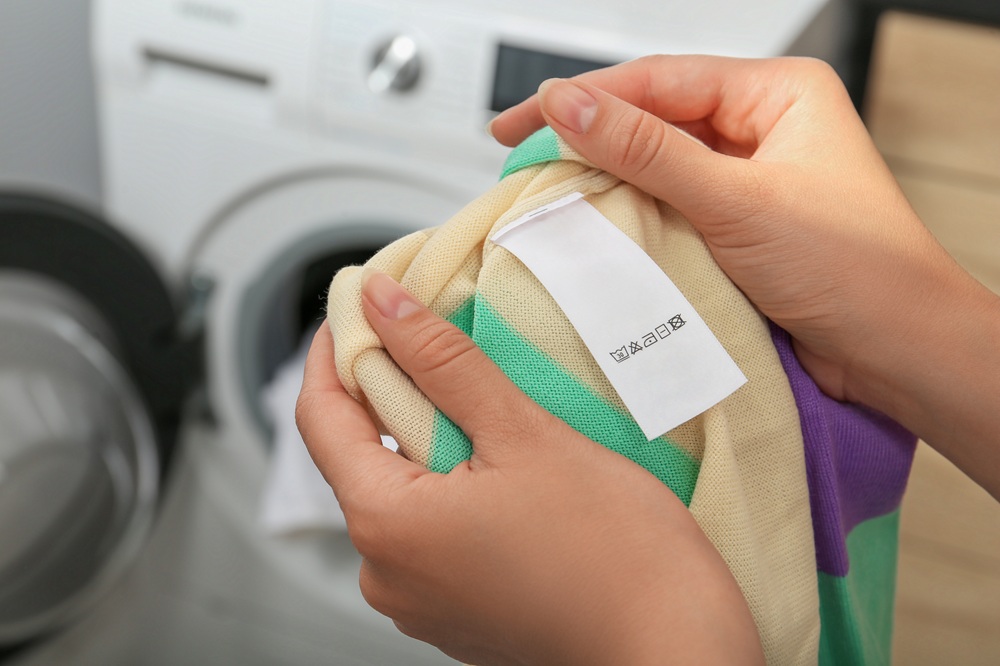
That is not bad luck. That is a care label that went unread. Most garment damage is not the result of neglect. It is the result of good intentions applied to the wrong method, because the instructions sewn into the collar felt too small, too technical, or too easy to ignore.
Here is what those symbols actually mean, which matter most for spring wardrobe pieces, and how to make smarter decisions when the label is missing or unreadable.
What are Garment Care Labels?
Care labels are the single most direct piece of garment-protection information a piece of clothing carries. Every instruction on that label was put there by the manufacturer based on the exact fibers, dyes, and construction methods used to make that specific item. Ignoring it is the leading cause of preventable shrinkage, color bleed, fiber damage, and permanently lost shape.
The Five Categories Every Care Label Is Built Around
Every clothes care label symbol in the world, regardless of brand, country of origin, or fabric type, belongs to one of five universal categories. This framework makes any label readable, even unfamiliar labels.
| Category | Base Symbol Shape | What It Covers |
|---|---|---|
| Washing | Water basin (tub) | Machine wash, hand wash, do not wash |
| Bleaching | Triangle | Any bleach, non-chlorine only, do not bleach |
| Drying | Square | Tumble dry, air dry, flat dry, dry in shade |
| Ironing and pressing | Iron shape | Temperature settings, steam safe, do not iron |
| Professional textile care | Circle | Dry cleaning, solvent type, do not dry clean |
The base shape tells you which category of care is being addressed. The modifiers – dots, letters, lines, and crosses – add the specific instruction within that category. Once the system clicks, unfamiliar symbols stop being confusing. You can work out what they mean from the shape alone.
Dry Cleaning Symbols Explained: What the Circle and Its Variations Actually Mean
The circle is the base symbol for professional care, including dry cleaning. It is also the symbol family most likely to be ignored, cut out, or assumed to mean optional.
- A plain circle means dry clean. The garment requires professional cleaning. No water, no machine cycle, no gentle home setting that seems close enough.
- A circle with the letter A inside means any dry cleaning solvent is safe. This is the most open classification and gives the cleaner maximum flexibility.
- A circle with the letter F inside means the cleaner should use a petroleum-based solvent only, usually tied to particular dye types or fabric sensitivities that react poorly to stronger chemicals.
- A circle with the letter P inside means a limited range of solvents should be used, typically signalling a more delicate construction or fiber that cannot tolerate certain chemical exposures.
- A circle with a single underline means use a gentler cycle at the dry cleaner, lower agitation and more careful handling. Common on tailored or fragile pieces.
- A circle with an X through it means do not dry clean under any circumstances. Some garments have dyes, embellishments, or structural elements genuinely damaged by professional cleaning chemicals.
The letters inside the circle are instructions for the cleaner, not for you personally. But knowing what they mean helps you communicate more clearly at drop-off and understand why a specific treatment is recommended.
When a care label has been cut out, washed to illegibility, or was never there at all, the safest default for anything structured, silk, wool, or of significant value is professional dry cleaning. Uncertainty is not something to push through. It is a signal to take in the piece rather than guess.
Reading Washing, Drying, and Ironing Symbols Without a Decoder Sheet
Once you understand that dots signal intensity and a cross means stop, the remaining laundry care symbols become far more readable than they first appear.
Reading Washing, Drying, and Ironing Symbols Without a Decoder Sheet
Once you understand that dots signal intensity and a cross means stop, the remaining laundry care symbols become far more readable than they first appear.
The most common and costly mistakes happen in two places: (1) missing the cross entirely and machine washing or tumble drying something that should not be, and (2) ignoring the dot count on the iron, which is how garments get scorched or develop permanent sheen marks.
Spring Wardrobe Pieces That Almost Always Have a Dry Clean Label and Why
Knowing which pieces in your spring wardrobe are most likely to carry a dry clean instruction saves you from a rushed assumption on laundry day.
Lightweight wool trousers and blazers
The risk: permanent shrinkage and felting
Wool fibers are highly sensitive to heat and agitation. Machine washing causes them to felt: the fibers interlock irreversibly, producing a stiff, matted texture that no amount of reshaping will fix.
Silk blouses and dresses
The risk: tearing, water spots, and color change
Silk loses tensile strength when wet, making it prone to tearing and uneven stretching. The dyes used in many silk garments are water sensitive. A standard wash cycle can cause irreversible color change or patchy fading.
Linen-blend structured pieces
The risk: bubbling and lining separation
Often the linen itself is not the problem – it’s what’s underneath. Interfacing, canvas, and lining materials can shrink or warp at different rates to the outer fabric, causing bubbling and separation that can’t be undone at home.
Embellished tops and occasion wear
The risk: lost beading, dissolved adhesives, loose stitching
Beading, sequins, embroidery, and bonded appliques are typically attached in ways that don’t survive water immersion or machine agitation. Stitching loosens, adhesives dissolve, and embellishments fall away.
Trench coats and lined spring jackets
The risk: puckering, misalignment, and permanent shape loss
The outer shell, lining, and interfacing are often made from materials with different care requirements. Washing at home risks each layer responding differently — resulting in a garment that no longer sits correctly and can’t be pressed back into shape.
What to Do When the Label Is Missing, Faded, or Just Confusing
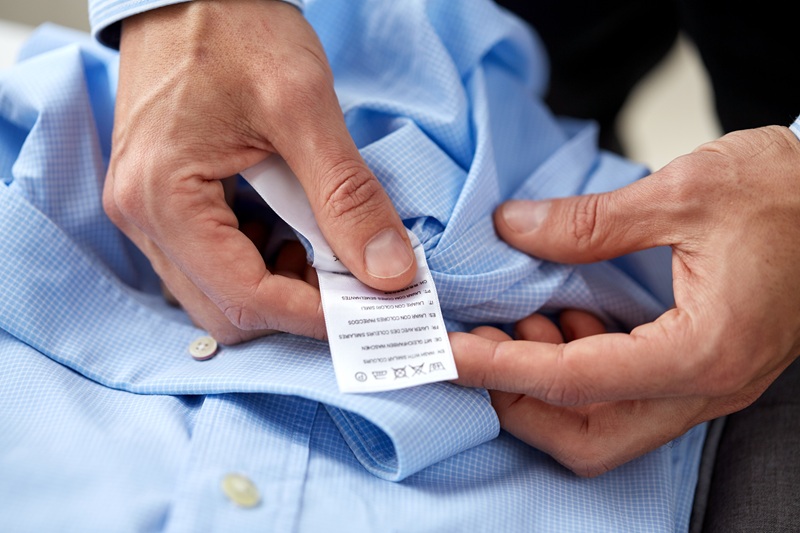
Labels get cut out. They get washed to illegibility over years of use. Vintage and secondhand pieces often arrive with no label at all, or one printed in a language where you cannot identify the symbol shapes. This is not an excuse to guess.
Start with the fabric content label.
If the care label is gone but the composition label remains, the fiber content gives strong clues. Anything high in silk or wool, or structured with lining materials, is a risk to wash at home. High cotton content in a simple construction is generally far more forgiving.
Check the brand’s care guidance online.
Many manufacturers publish care information by product line. A quick search with the brand name and garment description can surface the original instructions even when the physical label is gone.
When uncertain, take it to a professional rather than guessing. A single incorrect wash can cause permanent damage: fibers shrink and do not return to their original length, colors bleed and do not come back, linings separate and cannot be reattached, shapes distort in ways careful ironing will not fix. The cost of dry cleaning is almost never more than a fraction of the price of replacing a garment damaged through uncertainty.
When the Care Label Leaves You Guessing, The Dry Cleaning Factory Has the Answer
At The Dry Cleaning Factory in Miami, those garments about which you are uncertain are exactly what we specialize in caring for. Bring in anything with a confusing label, a missing label, or a dry clean symbol you are not sure applies.
We assess every piece before we touch it and choose the cleaning method that protects it. Our FREE Pickup and Delivery Service means you do not need to make a special trip.
The Dry Cleaning Factory:
📍 5716 W. Flagler St., Miami, FL, 33144
📧 info@thedrycleaningfactory.com
🗓 Schedule a Free Pickup: https://thedrycleaningfactory.smrtapp.com/custx/login